
After IC3: Should You Also Report a Crypto Scam to the FTC?
Updated: Jan 19
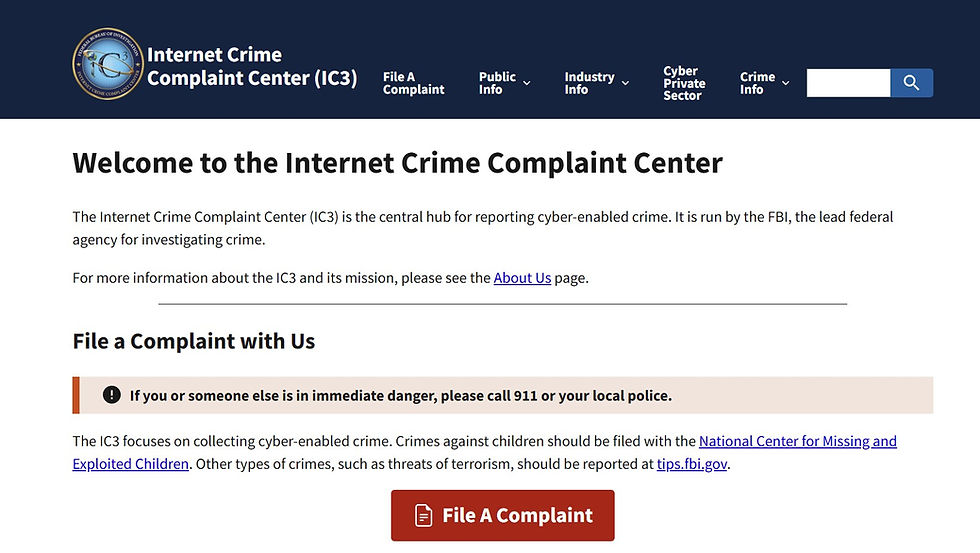
Once you’ve filed your report with the Internet Crime Complaint Center (IC3), many people ask the next logical question:
“Is there anywhere else I should report this?”
In many cases, yes — the Federal Trade Commission (FTC) is a helpful second step.
What the FTC Actually Does (and Why It Matters)
The Federal Trade Commission is the U.S. government’s main consumer protection agency.
Unlike IC3, the FTC does not usually investigate individual cases directly. Instead, they focus on:
Tracking scam trends nationwide
Identifying new scam tactics
Shutting down fraudulent websites and operations
Issuing public warnings to protect others
Your report helps the FTC see the bigger picture.
Think of it this way:
IC3 = law enforcement intake
FTC = consumer protection and prevention
Both play important roles.
When Reporting to the FTC Is Especially Helpful
You should strongly consider reporting to the FTC if:
The scam involved a fake website, app, or impersonation
You were targeted through ads, social media, or email
The scam felt “consumer-facing” (fake investments, giveaways, recovery scams)
You want to help prevent others from being targeted
Even if you’ve already filed IC3, an FTC report adds value.
How to Report a Crypto Scam to the FTC (Simple Steps)
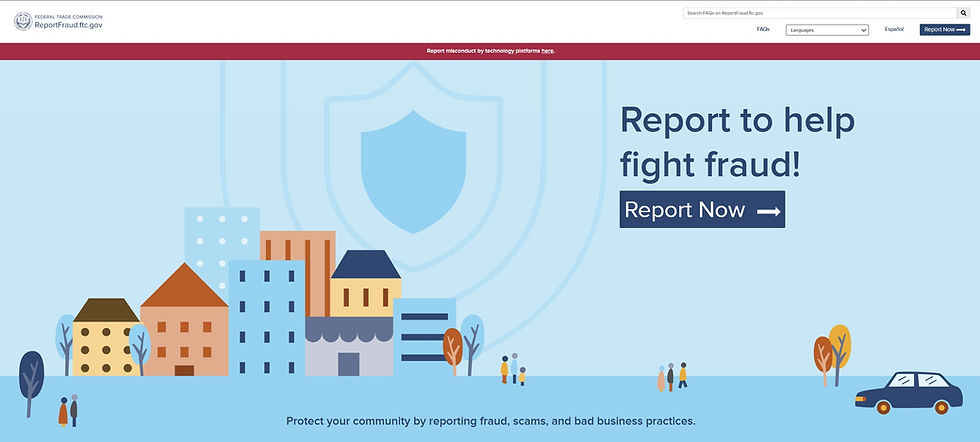
Click “Report Now”
Choose “Investment Scams” or “Online Shopping & Services” (whichever fits best)
Select Cryptocurrency when asked about payment method
Enter:
The scam website or platform
How you were contacted
Amount lost (if any)
Dates and basic details
You don’t need transaction IDs here — keep it simple.
What the FTC Can and Can’t Do
The FTC can:
Use your report to identify scam patterns
Take action against fraudulent companies and websites
Help issue alerts and warnings to the public
The FTC cannot:
Recover your crypto
Contact the scammer
Provide case updates
This doesn’t mean reporting is pointless. It means your report is contributing to prevention and enforcement at scale.
Report to FTC here at https://reportfraud.ftc.gov/
If you need a simple checklist to help with your report download it here at https://www.go-crypto.org/_files/ugd/9f9825_f8fa8f59667245bbafe07e4a3291fb20.pdf
A Gentle Reminder
If you’ve been scammed, reporting your crypto scam to the FTC can feel exhausting, both emotionally and mentally. Take it one step at a time.
Reporting is about documentation, protection, and breaking the cycle.
If you need help understanding what to report, or how to describe what happened clearly, Go-Crypto is here to support you.
💙 Educating. Investigating. Protecting Digital Assets.— The Go-Crypto Team
Visit us at https://www.go-crypto.org/


Comments